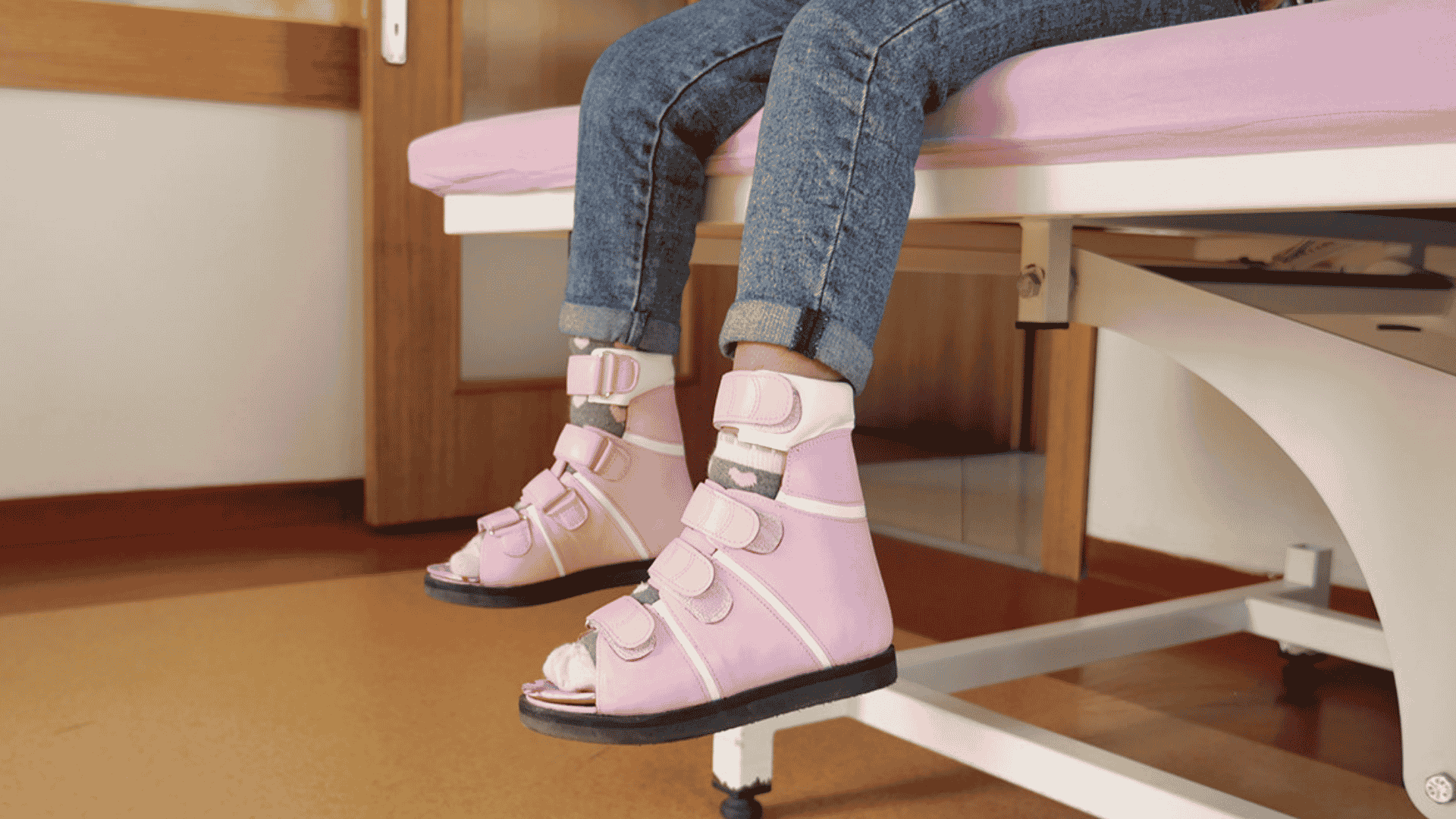
Have you ever stood in a drugstore aisle turning over a foam arch support and wondering whether it will actually do anything? The debate over custom orthotics vs off the shelf solutions is one of the most common conversations we have with patients at Orthopedic Appliance Company. The honest truth is that the right choice depends on the nature of your condition, the part of the body being supported, and what you are trying to accomplish over the long term.
This guide walks through the key differences between custom and prefabricated orthotic devices across the major bracing categories, explains when each approach is appropriate, and helps you understand why a precise fit is not just a comfort issue. For many patients, it is a clinical one.
What Is the Actual Difference Between Custom and Off-the-Shelf Orthotics?
The difference between a custom brace vs store bought isn’t mainly about quality of materials. The more significant difference is how the device is designed and for whom.
Off-the-shelf (prefabricated) devices are manufactured in standard sizes and shapes. They are designed to serve a broad population and are often appropriate for mild, temporary, or low-complexity conditions. You can purchase them without a prescription at a pharmacy or sporting goods store.
Custom orthotic devices are fabricated specifically for one patient. A certified orthotist takes precise measurements, performs a clinical evaluation, and in many cases creates a mold or digital scan of the patient's anatomy. The resulting device matches the patient's unique structure, accommodates their specific diagnosis, and is adjusted until fit and function are optimized. At Orthopedic Appliance Company, all orthotic devices are measured, fabricated, and fitted by our skilled orthotists on site.
Here is a quick side-by-side summary of the two categories:
- Fit: Prefabricated devices come in S/M/L sizing; custom devices conform precisely to the patient's anatomy
- Clinical oversight: Off-the-shelf devices require no prescription; custom devices involve evaluation and fitting by a certified practitioner
- Fabrication: Prefabricated devices are mass-produced; custom devices are built individually for each patient
- Applications: Off-the-shelf devices are suited to mild or temporary conditions; custom devices are indicated for structural, neurological, or complex biomechanical conditions
- Adjustability: Prefabricated devices offer limited modification; custom devices can be adjusted and refined over time
For more, read our blog about how to improve lower leg mobility with orthotic devices.
Foot Orthotics: Where the Conversation Usually Starts
Foot orthotics are probably the most recognized category in the custom orthotics vs off the shelf debate, and for good reason. Generic insoles are widely sold and heavily marketed, which creates a lot of confusion about when they are actually sufficient.
For mild discomfort, occasional arch fatigue, or general cushioning needs, a well-made prefabricated insole can provide real relief. That said, the conditions that send most patients to an orthotist are not mild. Patients with plantar fasciitis that has not responded to conservative treatment, adult-acquired flatfoot, diabetic foot complications, or structural deformities often need significantly more than a store-bought insert can provide.
At OAC, our foot care services include several distinct custom foot orthotic options designed to address specific clinical needs:
- Custom rigid functional orthotics are used to completely control motion in the foot joints directly below the ankle, making them appropriate for conditions where excessive pronation or supination is the underlying problem.
- Custom semi-rigid functional orthotics offer motion control with a degree of flexibility, often suited to patients who need both support and shock absorption.
- Custom accommodative orthoses are designed to cushion the foot and redistribute pressure, which is particularly important for patients with diabetes, heel ulcerations, or Charcot foot.
For patients with diabetes specifically, foot health is not a comfort issue. It is a matter of preventing ulceration and serious complications. A generic insole is simply not equipped to manage the pressure redistribution demands of diabetic foot care.
Ankle Foot Orthotics: When Precision Is Non-Negotiable
Ankle foot orthoses, commonly called AFOs, span a wide range of clinical applications. Some patients with mild ankle instability may find relief from a prefabricated elastic ankle support or an air cast. But the moment a condition involves neurological involvement, significant muscle weakness, or complex gait dysfunction, custom fabrication becomes necessary.
Conditions such as drop foot, multiple sclerosis, stroke-related weakness, cerebral palsy, and spinal cord injury all affect the way the ankle and foot function during gait in ways that are highly individual. A solid ankle AFO, posterior leaf spring AFO, or ground reaction AFO must be molded to the patient's specific limb geometry to function correctly. An ill-fitting AFO can create pressure points, alter gait mechanics, and in some cases cause new injuries.
The range of custom AFO options OAC fabricates reflects just how varied ankle and foot conditions can be: from pressure relief AFOs for patients with plantar or heel ulcerations, to spiral carbon fiber AFOs for dorsiflexion weakness, to CROW boots for Charcot foot management.
Read our blog about the role of ankle braces in preventing sports injuries.
Knee Orthotics: A Category With Room for Both Approaches
Knee bracing is one area where the line between prefabricated and custom devices is somewhat more nuanced. For a mild sprain, post-exercise soreness, or general joint support during activity, many patients do well with a quality prefabricated knee sleeve or hinged support. These are readily available and provide adequate compression and mild stabilization for low-stakes applications.
However, for patients with moderate to severe osteoarthritis, ACL or PCL injuries, post-surgical recovery, or significant ligament instability, the fit and function of the brace become clinically significant. An osteoarthritis unloader brace, for example, is designed to shift load away from the damaged compartment of the knee. To accomplish that effectively, the brace must be fitted precisely to the patient's anatomy and adjusted by someone who understands the biomechanics involved.
At OAC, our orthotists work with patients on the full range of knee orthotic options, from range of motion braces for post-operative recovery to ACL/MCL/PCL braces for ligament protection and custom-fitted OA unloaders for arthritis management. When a patient is asking whether a custom brace vs store bought knee brace is the right call, the answer often comes down to the severity of their condition and whether they have already tried a prefabricated option without adequate results.
Spinal Orthotics: Almost Always a Custom Fit
When it comes to spinal bracing, the case for custom fabrication is strong across nearly all significant clinical applications. The spine's geometry, the patient's trunk dimensions, and the specific level and nature of the condition all matter enormously for how a spinal orthosis performs.
Prefabricated soft corsets and elastic lumbar supports may provide modest relief for mild low back strain or serve as a short-term supportive measure. But patients with scoliosis, vertebral fractures, post-surgical instability, or conditions requiring meaningful immobilization require significantly more. A custom-fabricated rigid body jacket is designed to the patient's exact measurements and provides the level of immobilization and skeletal alignment control that stock devices simply cannot replicate.
OAC's orthotic device services include the full spectrum of spinal orthoses, from soft and rigid LSO and TLSO braces to custom scoliosis braces and plastic body jackets, all fabricated in-house and fitted by our certified practitioners.
So Are Custom Orthotics Worth It?
This is the question patients are really asking when they search "are custom orthotics worth it," and the answer depends on the context. For someone with a mild, temporary condition, a well-chosen prefabricated device may be entirely appropriate and cost-effective. But for patients dealing with structural abnormalities, neurological conditions, post-surgical recovery, or chronic pain that has not responded to conservative measures, custom orthotic devices are not a luxury. They are a clinical tool, and the fit is a core part of how that tool works.
There is also the question of long-term outcomes. An off-the-shelf device that does not adequately address the underlying biomechanical issue may provide temporary relief while allowing the condition to progress. Custom fabrication, done by experienced practitioners, aims to interrupt that cycle.
What the ABC Certification Means for You
One thing that sets OAC apart is that our practitioners and facility are certified by the American Board for Certification in Orthotics and Prosthetics (ABC). ABC certification is not a formality. It represents rigorous ongoing standards for both clinical competency and facility quality. When an orthotist is ABC-certified, it means they have met demanding educational and clinical requirements and are held accountable to professional standards that protect patients.
For patients considering custom orthotic devices, the quality of the fitting process is just as important as the quality of the device itself. OAC has been providing custom orthopedic bracing to the people of Western North Carolina since 1960, and that depth of experience shows in the way we approach every evaluation and fitting.
We also work with most major insurance providers, including Medicare and Medicaid, to help make custom orthotic care accessible. Visit our insurance page for more information on coverage options, or contact our patient coordinators who are glad to help you navigate the process.
Quick Reference: When Each Option Is Appropriate
Prefabricated devices may be sufficient when:
- The condition is mild and temporary (minor ankle sprains, general arch fatigue, post-exercise knee soreness)
- A physician has recommended a standard prefabricated brace as a first step
- The patient has no structural abnormalities or neurological involvement
- The device is being used for general activity support, not therapeutic correction
Custom fabrication is typically indicated when:
- The condition involves neurological compromise, structural deformity, or post-surgical recovery
- The patient has diabetes with foot complications or risk factors for ulceration
- A prefabricated device has been tried and has not provided adequate relief
- The condition requires precise pressure distribution, immobilization, or biomechanical correction
- A physician or orthotist has evaluated the patient and recommended a custom device
Frequently Asked Questions
Does insurance cover custom orthotics?
Many insurance plans, including Medicare and Medicaid, provide coverage for custom orthotic devices when they are medically necessary and prescribed by a physician. Coverage varies depending on your specific plan and diagnosis. OAC's insurance and patient coordinators can help you verify your benefits before your appointment.
Do I need a prescription to get custom orthotics?
Yes. In order to file an insurance claim for a custom orthotic or prosthetic device, a prescription from a physician is required. We recommend speaking with your doctor about your condition so they can provide the appropriate referral.
How do I know if I need a custom brace vs store bought?
The most reliable way to answer that question is to have a clinical evaluation. A certified orthotist can assess your gait, anatomy, and diagnosis and recommend the appropriate level of device. Many patients are surprised to learn that their condition warrants custom fabrication, while others find that a well-chosen prefabricated device is appropriate for their needs.
How long does it take to get a custom orthotic device from OAC?
The timeline varies depending on the type of device and your specific requirements. Our in-house fabrication capabilities allow us to complete many devices more efficiently than practices that outsource their lab work. Your orthotist will give you a timeline after your evaluation.
What bracing categories does OAC provide?
OAC provides a comprehensive range of orthotic devices including foot orthotics, ankle foot orthoses, knee orthoses, KAFOs, spinal orthotics (cervical through lumbar), upper extremity bracing, and pediatric orthotic devices. All devices are measured, fabricated, and fitted at our locations.
Ready to Take the Next Step?
If you are weighing whether a custom orthotic solution is right for your situation, the best starting point is a conversation with one of our certified practitioners. At Orthopedic Appliance Company, we take the time to understand your condition, your lifestyle, and your goals before recommending any device. Contact our team today to schedule an evaluation at one of our convenient locations in Asheville, Fletcher, or Hickory, NC, or Bryant, AR.