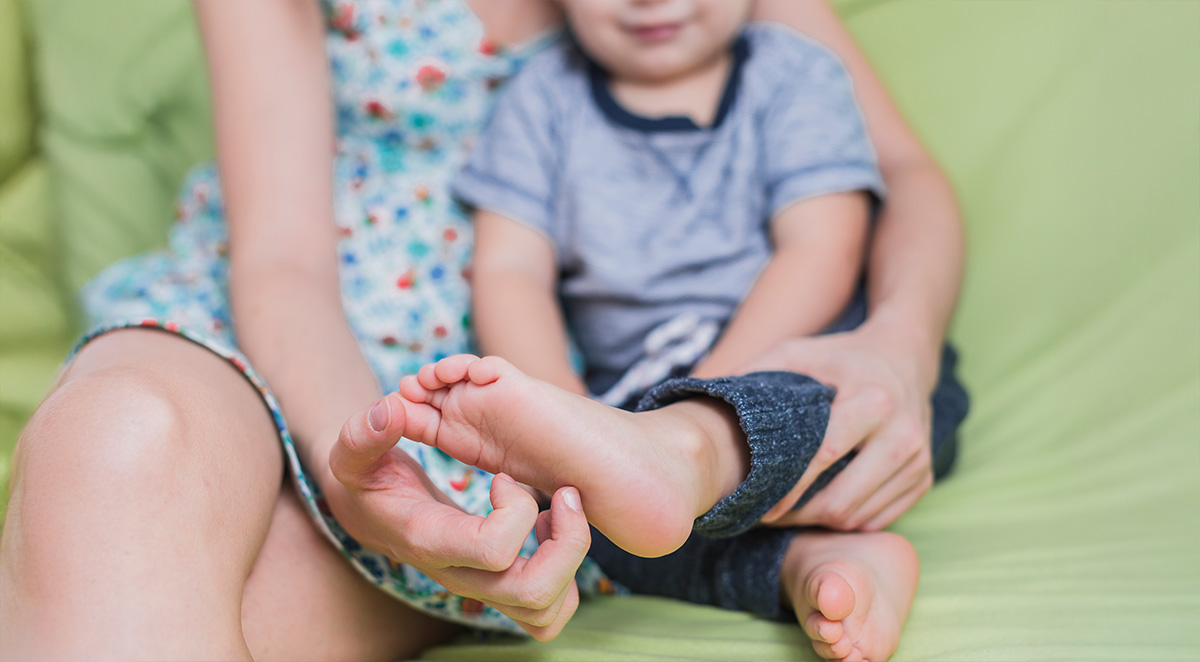
Children's feet are constantly growing and developing, making them susceptible to various foot conditions that can impact their mobility, comfort, and long-term foot health. As parents, understanding these conditions and knowing when to seek professional help can make a significant difference in your child's development and quality of life.
At Orthopedic Appliance Company, we've been providing custom orthopedic bracing solutions to families across Western North Carolina since 1960. Our experienced team specializes in pediatric foot conditions and offers personalized bracing options to address a wide range of concerns.
1. Understanding Pediatric Foot Development
Children's feet undergo remarkable changes during their early years. From the flat-footed appearance of toddlers to the gradual development of arches and proper alignment, each stage brings unique challenges and milestones.
Most children are born with flat feet, with arches typically developing between ages 3 and 5. By age 6, many children have developed normal foot structure, though some variations are entirely natural. However, when foot development deviates significantly from normal patterns or causes pain, limited mobility, or affects walking patterns, intervention may be necessary.
Early intervention for pediatric foot conditions can prevent long-term complications including:
- Chronic pain and discomfort
- Abnormal walking patterns
- Reduced physical activity levels
- Secondary issues in the knees, hips, and back
- Decreased quality of life and participation in sports and activities
2. Common Pediatric Foot Conditions
Flat Feet (Pes Planus)
While flat feet are normal in infants and toddlers, persistent flat feet beyond age 6 might indicate a condition requiring attention, especially if accompanied by pain or awkward gait.
Symptoms to watch for:
- Foot pain or fatigue
- Inside edge of the foot turning outward
- Pain in the heel or arch
- Awkward walking pattern
How bracing helps: Custom orthotic devices and supportive inserts can provide arch support, redistribute pressure, and promote proper foot alignment. For children with flexible flat feet, supportive footwear with orthotic inserts often provides sufficient correction.
Clubfoot (Talipes Equinovarus)
Clubfoot is a congenital condition where a baby's foot is twisted inward and downward. Early treatment is essential and usually begins shortly after birth.
Symptoms:
- Foot appears rotated internally at the ankle
- The foot may be smaller than normal
- Calf muscles may be underdeveloped
- Limited range of motion
How bracing helps: Following initial correction through casting or surgery, bracing plays a crucial role in maintaining the corrected position. The Ponseti method, widely used for clubfoot treatment, utilizes foot abduction braces worn full-time initially, then during naps and nighttime for several years to prevent recurrence.
Intoeing (Pigeon Toes)
Intoeing occurs when children walk with their feet turned inward instead of pointing straight ahead.
Causes include:
- Metatarsus adductus (curved foot)
- Internal tibial torsion (twisted shin bone)
- Femoral anteversion (twisted thigh bone)
How bracing helps: Depending on the underlying cause, orthotic devices or special shoes can help guide proper foot positioning. For more severe cases, custom braces may be recommended to gradually correct alignment.
Toe Walking
Some children walk on their toes or the balls of their feet without letting their heels touch the ground. While occasionally toe walking is normal in early walkers, persistent toe walking beyond age 2 may indicate an underlying condition.
Possible causes:
- Short Achilles tendon
- Sensory processing disorders
- Cerebral palsy
- Muscular dystrophy
- Autism spectrum disorder
How bracing helps: Ankle-foot orthoses (AFOs) are often prescribed to encourage a heel-toe walking pattern. These braces help stretch tight calf muscles and Achilles tendons while promoting proper foot positioning during walking.
Pediatric Plantar Fasciitis
Though more common in adults, children and adolescents can develop plantar fasciitis, particularly active kids involved in sports that involve running and jumping.
Symptoms:
- Heel pain, especially with first steps in the morning
- Pain after (not typically during) physical activity
- Pain when standing after sitting for long periods
How bracing helps: Night splints keep the foot in a dorsiflexed position, gently stretching the plantar fascia during sleep. Custom orthotic devices provide arch support and help distribute pressure evenly across the foot during daily activities.
Sever's Disease
Sever's disease (calcaneal apophysitis) is a common cause of heel pain in growing children, particularly those who are physically active.
Symptoms:
- Pain in one or both heels, especially during or after activity
- Tenderness at the back of the heel
- Limping or walking on tiptoes to avoid pressure on the heel
- Pain that worsens when the heel is squeezed
How bracing helps: Heel cups or custom orthotics with heel cushioning can reduce pressure on the growth plate. In some cases, an ankle brace may be recommended to limit excessive movement and reduce strain on the heel.
3. How Bracing Solutions Help
Pediatric foot braces come in various forms, each designed to address specific conditions and provide appropriate support. The right bracing solution can make a significant difference in your child's comfort, mobility, and long-term foot health.
Types of Pediatric Foot Braces
Supramalleolar Orthoses (SMOs)
These shorter braces extend just above the ankle bones and are designed to control foot alignment while allowing ankle movement. SMOs are often prescribed for children with flexible flat feet, mild instability, or hypotonia (low muscle tone).
Ankle-Foot Orthoses (AFOs)
AFOs extend from the foot to just below the knee, providing both foot and ankle support. They come in several varieties:
- Solid AFOs: Limit all ankle movement, providing maximum stability
- Hinged AFOs: Allow up-and-down ankle movement while controlling side-to-side motion
- Posterior Leaf Spring AFOs: Allow some ankle flexibility while preventing foot drop
- Ground Reaction AFOs: Help with knee stability in addition to foot alignment
Foot Orthoses (Custom Inserts)
Less restrictive than braces, custom orthotic inserts fit inside regular shoes to provide arch support, cushioning, and alignment correction for conditions like flat feet or mild pronation issues.
The Science Behind Orthotic Intervention
Pediatric foot braces work through several mechanisms:
- Alignment correction: Braces guide bones, joints, and muscles into proper alignment during the critical growth period
- Muscle support: They support weak muscles while allowing stronger muscles to develop normally
- Movement control: Braces can limit unhealthy movements while encouraging beneficial ones
- Pressure redistribution: Custom orthoses spread pressure evenly across the foot to prevent pain and deformity
Expected Outcomes with Proper Bracing
With consistent use of properly fitted braces, many children experience:
- Reduced pain and discomfort
- Improved walking pattern (gait)
- Enhanced balance and stability
- Increased confidence and participation in activities
- Prevention of long-term complications
- Gradual improvement in foot structure and function
4. When to Seek Professional Help
As a parent, knowing when to consult a healthcare professional about your child's feet can prevent unnecessary worry while ensuring timely intervention when needed.
Warning Signs That Require Medical Attention
- Persistent pain in the feet, ankles, or legs
- Reluctance to walk or participate in physical activities
- Uneven shoe wear or rapidly outgrowing shoes on one side
- Complaints that legs are "tired" or need frequent rest during activities
- Tripping or falling frequently
- Unusual walking pattern that doesn't improve with age
- Stiffness or limited range of motion in the foot or ankle
- Swelling or redness in the feet or ankles
The Diagnostic Process
When you visit Orthopedic Appliance Company for a pediatric foot evaluation, our certified orthotists will conduct a thorough assessment that may include:
- Clinical examination: Observing your child's walking pattern, foot structure, and range of motion
- Medical history review: Understanding developmental milestones and any existing health conditions
- Gait analysis: Evaluating how your child walks to identify abnormal patterns
- Footwear assessment: Examining current shoes for wear patterns and fit
- Referral coordination: Working with your child's pediatrician or orthopedic specialist to ensure comprehensive care
Working with Your Pediatrician and Orthotist
A collaborative approach between healthcare providers yields the best outcomes for children with foot conditions. Your pediatrician may refer you to our orthotic specialists, or you may contact us directly with your physician's prescription.
Our team works closely with pediatricians, orthopedic surgeons, physical therapists, and other healthcare providers to develop comprehensive treatment plans tailored to your child's specific needs.
5. Our Approach to Pediatric Foot Bracing
At Orthopedic Appliance Company, we understand that fitting a child for orthotic devices requires specialized knowledge, patience, and a family-centered approach.
Custom Fitting Process
Our pediatric bracing process typically includes:
- Initial consultation: We'll discuss your child's condition, medical history, and goals for treatment
- Comprehensive evaluation: Our certified orthotists will assess your child's foot structure, gait, and functional needs
- Impression or scanning: We'll capture precise measurements of your child's feet using state-of-the-art techniques
- Custom fabrication: Our skilled technicians will create braces specifically designed for your child's unique needs
- Fitting and adjustment: We ensure proper fit and make any necessary modifications for optimal comfort and function
- Education and training: We'll demonstrate proper use, care, and maintenance of the bracing devices
Child-Friendly Approach
We recognize that the bracing process can be intimidating for children. Our team is experienced in making the experience positive and stress-free through:
- Age-appropriate explanations
- Involving children in the selection process (colors, patterns) when possible
- Celebrating milestones and improvements
- Creating a welcoming, child-friendly environment
- Focusing on what the braces will help them do, not what they limit
Follow-up Care and Adjustments
Growing children require regular adjustments to their orthotic devices. Our comprehensive follow-up care includes:
- Scheduled check-ups to assess brace function and fit
- Modifications as your child grows
- Evaluating progress and making treatment adjustments as needed
- Ongoing communication with your child's healthcare team
- Support for families navigating insurance coverage and reimbursement
6. FAQs About Pediatric Foot Conditions and Bracing
How do I know if my child's flat feet are a problem that needs treatment?
Flat feet in children under age 6 are usually normal and don't require intervention. Consider seeking evaluation if your child's flat feet are accompanied by pain, fatigue, awkward walking patterns, or if they avoid physical activities. Our orthotists can assess whether your child's flat feet fall within normal developmental ranges or would benefit from orthotic support.
Will my child need to wear braces forever?
Most pediatric foot braces are temporary interventions designed to guide proper development during growth periods. The duration depends on your child's specific condition, severity, response to treatment, and growth rate. Some children need braces for several months, while others may require them for a few years. Our team will provide a customized treatment timeline based on your child's unique needs.
Are pediatric foot braces covered by insurance?
Many insurance plans, including Medicare and Medicaid, cover medically necessary orthotic devices with a physician's prescription. Coverage varies by plan and condition. Our patient coordinators work closely with insurance companies to verify benefits and maximize coverage. Contact us for assistance with insurance questions related to pediatric bracing.
How can I help my child adjust to wearing foot braces?
Establishing a consistent wearing schedule, explaining the benefits in age-appropriate terms, and celebrating progress can help children adapt to braces. Gradually increasing wearing time and incorporating the braces into daily routines can improve compliance. Our team provides specific guidance based on your child's age, brace type, and personality.
Can my child participate in sports while wearing foot braces?
Many children can continue sports and physical activities while wearing braces. The specific recommendations depend on the type of brace and sport. Some braces are designed for active wear, while others may need to be removed during certain activities. Our orthotists can help develop activity guidelines that balance treatment needs with your child's desire to participate in sports and recreation.
How often will my child need new braces as they grow?
Growing children typically need brace adjustments or replacements every 12-18 months, though this varies based on age and growth rate. Younger children grow more rapidly and may need more frequent adjustments. Our follow-up care program includes regular assessments to ensure optimal fit and function as your child grows.
7. Conclusion
Early intervention for pediatric foot conditions can significantly impact your child's comfort, mobility, and long-term foot health. With proper diagnosis and appropriate bracing solutions, many common foot conditions can be effectively managed or corrected during childhood, preventing complications in adolescence and adulthood.
At Orthopedic Appliance Company, we've been helping children walk, run, and play comfortably for over 60 years. Our team of certified orthotists specializes in pediatric care and is committed to finding the right bracing solution for your child's unique needs.
If you've noticed concerning symptoms or have questions about your child's foot development, we invite you to schedule a consultation at one of our convenient locations in Asheville, Fletcher, or Hickory. Our compassionate team will provide expert evaluation and guidance on the most appropriate treatment options.
Contact us today to learn more about our pediatric bracing solutions and how we can help your child step confidently into the future.