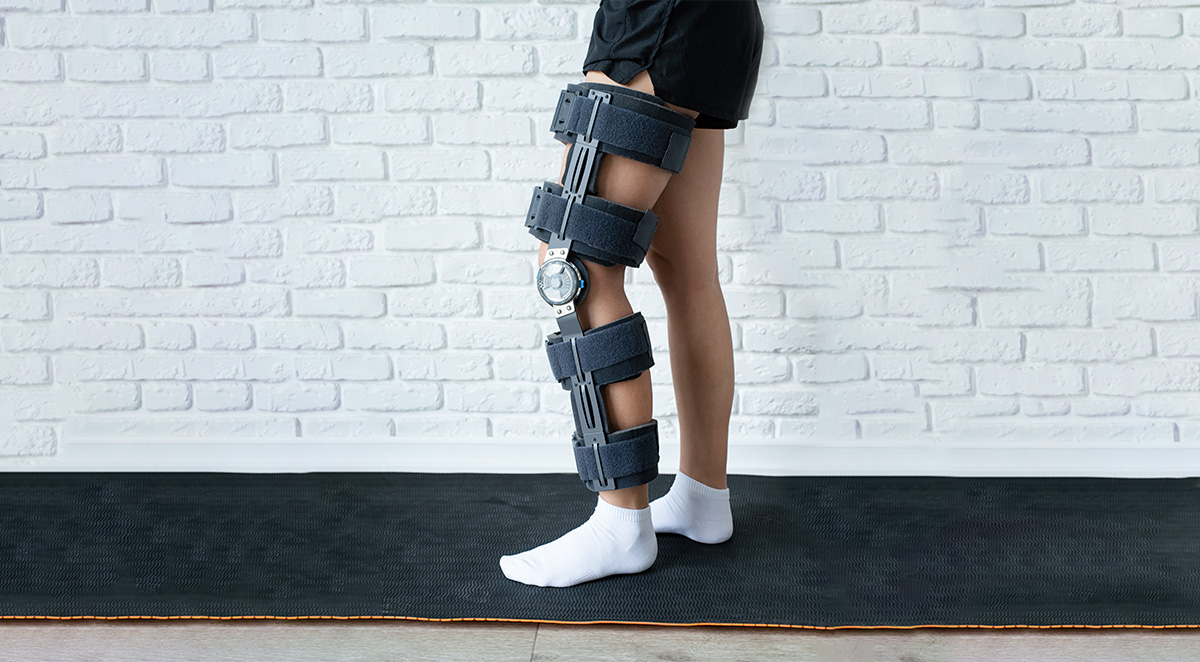
When weakness or instability in your leg makes walking feel unsafe or exhausting, the right brace can restore both mobility and confidence. A knee-ankle-foot orthosis, or KAFO, is one of the most supportive devices in orthotics, designed to stabilize the leg from the thigh all the way down to the foot. If your physician has mentioned a KAFO, or you're simply exploring your options, understanding how these devices work makes the path ahead far less daunting.
KAFOs have come a long way from the heavy metal-and-leather braces of decades past. Today's devices are lighter, smarter, and more tailored to each person than ever before. Here's a clear guide to what KAFOs are, who they help, the technology behind them, and what getting one at Orthopedic Appliance Company is like.
Quick Summary
- A KAFO is a brace that supports and controls the knee, ankle, and foot together, used when weakness or instability can't be managed by a smaller brace alone.
- It's commonly prescribed for conditions like post-polio syndrome, muscular dystrophy, multiple sclerosis, spinal cord injury, stroke, and certain post-surgical or fracture situations.
- Modern options range from traditional locked-knee braces to stance-control and microprocessor-controlled designs that allow a more natural, energy-efficient stride.
- Custom fabrication and a precise fit are what make a KAFO comfortable enough to wear consistently and effective at improving mobility.
- Ongoing follow-up and adjustments keep the device working well as your needs change.
What Is a KAFO?
A knee-ankle-foot orthosis is an external brace that extends from the thigh down over the knee, ankle, and foot. By supporting all three areas together, it stabilizes a leg that can't fully support itself, helping you stand and walk more safely. The device controls how much the knee bends, holds the ankle and foot in good alignment, and takes pressure off structures that are weak, injured, or painful.
KAFOs are typically prescribed when a smaller brace isn't enough. When weakness or instability at the knee can't be controlled by an ankle-foot orthosis or a knee brace alone, a KAFO steps in to provide that added stability (NCBI, PMC). That's why they're considered one of the more comprehensive bracing solutions available.
Who Benefits From a KAFO?
KAFOs help people across a wide range of conditions, most of which involve weakness in the muscles that control the knee. Weakness of the knee-extensor muscles can result from neurological and muscular conditions such as post-polio syndrome, spinal cord injury, multiple sclerosis, muscular dystrophy, and unilateral leg paralysis (NCBI, PMC). Left unsupported, that weakness can make walking slow, tiring, and unsafe.
Some of the situations where a KAFO may be recommended include:
- Neuromuscular conditions like muscular dystrophy, multiple sclerosis, and post-polio syndrome.
- Spinal cord injuries and certain cases of paralysis or paresis.
- Stroke recovery, when knee instability affects walking.
- Cerebral palsy, particularly where multiple joints need support.
- Severe knee arthritis, post-surgical recovery, or fracture healing that calls for full-leg stabilization.
Because every case is different, the goal is always matched to the person, whether that's walking more safely, standing for longer, reducing pain, or protecting a healing limb.
Types of KAFOs and the Technology Behind Them
Not all KAFOs work the same way, and the differences matter a great deal for how natural your walking feels. Here's how the main categories compare.
Traditional Locked-Knee KAFOs
The classic KAFO uses a knee joint that locks in a straight position for standing and walking. This provides excellent, dependable stability, which for many people is exactly what they need. The trade-off is that a permanently locked knee makes for a stiffer, less natural gait and can take more energy to walk, since you can't bend the knee during each step.
Stance-Control KAFOs
Stance-control designs were developed to solve that very problem. This type of brace locks the knee only during the stance phase, when your weight is on that leg, then releases it so the knee can bend freely during the swing phase. The result is a smoother, more natural stride than a locked knee allows (NCBI, PMC).
Microprocessor-Controlled KAFOs
The most advanced option uses a microprocessor to manage both the stance and swing phases of walking, adjusting in real time to how you move. In a clinical trial, this kind of device improved balance, reduced the risk of falling, and boosted mobility and quality of life compared with traditional KAFOs (NCBI, PubMed). For the right candidate, that added responsiveness can be genuinely life-changing.
Modern Materials
The materials have evolved just as much as the mechanics. Where KAFOs were once made mostly of metal and leather, today's braces often use lightweight thermoplastics and carbon fiber, which offer strength without the bulk. At Orthopedic Appliance Company, we use tools like 3D scanning and computer-aided design to shape a device precisely to your leg, which improves both comfort and function.
What to Expect: From Evaluation to Walking
Getting a KAFO is a collaborative process, and knowing the steps ahead can ease a lot of uncertainty. While every journey is a little different, most follow a similar path.
- Evaluation: Your orthotist reviews your medical history and diagnosis, examines your leg's strength and alignment, watches how you move, and talks through your goals, all in coordination with your referring physician.
- Measurement and design: Using measurements, casting, or a 3D scan, your custom brace is designed around your body and your needs.
- Fabrication: The device is built and fine-tuned, with the appropriate joints and materials selected for your situation.
- Fitting: You're fitted for comfort and function, and shown how to put the brace on, take it off, and care for it.
- Gait training and follow-up: It takes time to adapt to a new device, so follow-up visits and adjustments help you build confidence and keep the fit right.
That last step matters more than people expect. A KAFO that fits well early on may need tweaking as your body or condition changes, and staying in touch with your care team is what keeps the device working as it should.
Caring for Your KAFO
A little routine care goes a long way toward keeping your brace comfortable and durable. Wipe down the device with mild soap and water rather than harsh chemicals, and let it dry fully. Check regularly for signs of wear, loose straps, or cracks, and keep an eye on your skin for any areas of redness or irritation. When something feels off, or the brace needs adjusting, reach out for a professional review rather than trying to force a fix.
Key Takeaways
- KAFOs support the entire leg and are used when weakness or instability can't be handled by a smaller brace.
- Today's options range from dependable locked-knee braces to stance-control and microprocessor designs that allow a more natural, efficient walk.
- Lightweight materials like carbon fiber and thermoplastics, combined with custom design, make modern KAFOs more comfortable and wearable.
- A good outcome depends on a precise fit, gait training, and ongoing follow-up, not just the device itself.
KAFO Care at Orthopedic Appliance Company
Since 1960, we've helped people regain mobility with custom orthotic solutions, and KAFOs are a device category where our clinical expertise really shows. Our certified practitioners take the time to understand your condition and goals, then design and fit a brace built specifically for you. We handle the details that make a device wearable, from material selection to the small adjustments that turn a good fit into a great one.
We fit KAFOs for patients of all ages across our locations, and you can learn more about our KAFO services in Bryant, Hickory, and Asheville. For a broader look at lower-limb bracing options, our guide to improving mobility with lower leg orthotic devices is a helpful companion read, and you can explore our full range of custom orthotic devices anytime.
Frequently Asked Questions
How long will I need to wear a KAFO?
That depends entirely on your condition. Some people use a KAFO temporarily while recovering from surgery or an injury, while others with a long-term neuromuscular condition wear one indefinitely. Your physician and orthotist will guide you on the right wearing schedule for your situation.
Will I be able to walk normally with a KAFO?
A KAFO is designed to make walking safer and more manageable, though how natural it feels depends on the type of device. Traditional locked-knee braces prioritize stability over a natural stride, while stance-control and microprocessor designs allow more fluid movement. Your care team will help match the right device to your goals.
Will my insurance cover a KAFO?
Coverage varies by plan and by the specific device recommended, since KAFOs range widely in complexity and cost. Our team is glad to help you understand your benefits, and our insurance information is a good place to start.
What's the difference between a locked and a stance-control KAFO?
A locked KAFO keeps the knee straight throughout walking for maximum stability, which can make your gait stiffer. A stance-control KAFO locks the knee only when you're bearing weight and releases it as you swing your leg forward, allowing a more natural stride. Which one suits you depends on your strength, balance, and goals.
How do I keep my KAFO in good shape?
Clean it with mild soap and water, inspect it regularly for wear, and check your skin for irritation. Bring it in for professional adjustments if the fit changes or anything feels loose. Consistent, gentle care extends the life and comfort of your brace.
Moving Forward With Confidence
A KAFO is more than a brace. For many people, it's the difference between struggling to move and reclaiming their independence. With today's lighter materials, smarter designs, and custom fabrication, these devices are more effective and comfortable than ever.
If you'd like to learn how a KAFO could support your mobility, our experienced team is here to help. Please contact us to talk through your needs and take the next step toward walking with greater confidence.