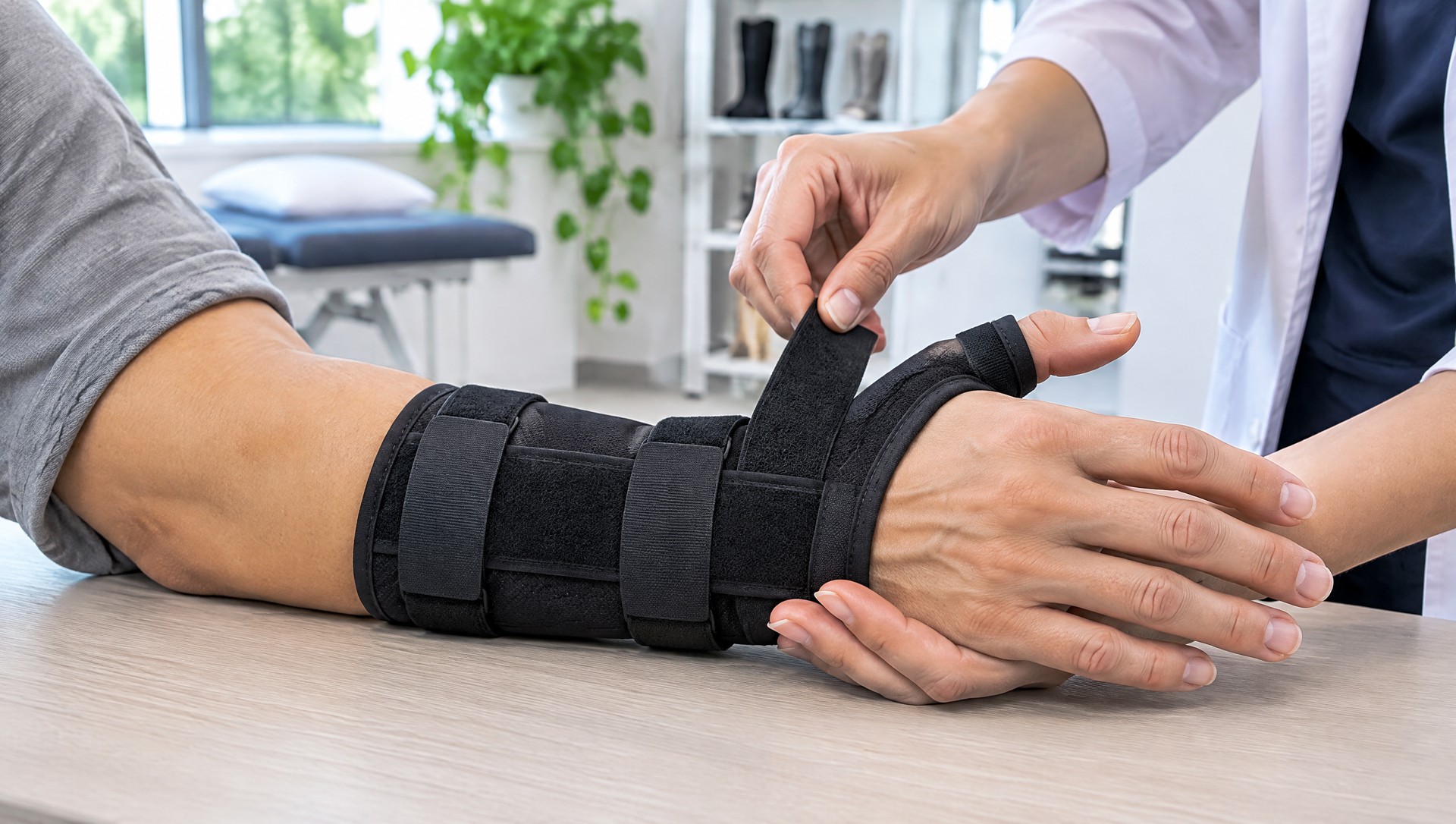
Your hands do a lot of quiet work. They grip the steering wheel on the drive into Little Rock, type through a workday, button a child's coat and hold a coffee cup. When pain, numbness or an injury gets in the way of those small tasks, everyday life starts to feel harder than it should. A well-fitted wrist or hand brace can help protect a sore or healing joint so you can keep doing the things that matter to you.
At Orthopedic Appliance Company in Bryant, our certified orthotists fit wrist and hand braces for people across Saline County and the Little Rock metro. We work with your physician's plan, take the time to understand your daily routine, and make sure your brace fits the way it should. Here is what you should know about wrist and hand bracing and how we can help.
Conditions We Commonly Brace
Wrist and hand braces come in many shapes, and each one is designed for a different job. Your physician decides which kind of support you need. Our role is to fit it well, explain how to wear it and adjust it as you heal.
Carpal Tunnel Syndrome
Carpal tunnel syndrome happens when the median nerve is squeezed as it passes through a narrow passage in the wrist. It can cause numbness, tingling, burning and weakness in the thumb and first few fingers, and symptoms often wake people up at night. Wearing a splint at night keeps the wrist straight, and a neutral wrist position reduces pressure on the nerve (AAOS, OrthoInfo). Some people also wear a brace during the day for activities that bring on symptoms.
A carpal tunnel brace is usually part of a larger plan that your physician guides. It can help with early symptoms, but it is not a cure, and some people still need other treatment. If your symptoms keep getting worse, talk with your doctor.
Wrist Sprains and Fractures
A fall on an outstretched hand is one of the most common ways to hurt a wrist. The result may be a sprain, where the ligaments are stretched or torn, or a fracture of one of the wrist bones. Depending on the injury, your physician may use a cast first and then move you into a removable brace, or start with a brace from day one.
A removable wrist brace can be taken off for bathing, skin checks and therapy exercises when your care team allows it. That flexibility is one reason many patients and physicians like them. If you want to know what to expect as a broken bone heals, our guide to fracture bracing and what to expect during recovery walks through the process step by step.
Thumb Injuries and Thumb Spica Braces
The thumb does a large share of the work in gripping and pinching, so a thumb injury can make simple tasks frustrating. A thumb spica brace supports the wrist and wraps around the thumb to limit its motion while still leaving the fingers free. Physicians may recommend this style for thumb ligament injuries, certain thumb and wrist fractures, tendon irritation along the thumb side of the wrist, and arthritis at the base of the thumb.
Thumb spica braces range from soft, flexible supports to rigid, custom-molded designs. The right choice depends on your diagnosis, how much motion your physician wants to allow and what you need to do with your hand each day.
Post-Surgical Wrist and Hand Immobilization
After surgery on the wrist, hand or fingers, your surgeon may want certain joints held still while tissues heal. A post-surgical splint or brace holds the joint in the position your surgeon prescribes. As healing moves forward, the brace may be adjusted or replaced to allow more motion.
We work from your surgeon's orders and can make changes as your needs change. If swelling goes down or your therapist wants a different angle, a brace that can be adjusted helps you stay on track without starting over.
Why Custom Fabrication Matters for Wrists and Hands
The wrist and hand are small, detailed structures. Every person's bones, joints and soft tissue are shaped a little differently, and swelling after an injury or surgery can change that shape from week to week. A brace that pinches, slides or leaves gaps may be uncomfortable, and a brace that is uncomfortable often ends up in a drawer instead of on your arm.
Custom fabrication can help solve those problems. Benefits of a custom wrist or hand orthosis may include:
- A closer fit: The brace follows the contours of your wrist, palm and thumb, which can reduce pressure points and slipping.
- Precise positioning: Your orthotist can set the angle of the wrist or thumb to match your physician's prescription.
- Better comfort for long wear: Night splints and post-surgical braces are often worn for many hours a day, so comfort counts.
- Room to adjust: Many custom designs can be modified as swelling changes or as you heal.
Off-the-shelf braces still have a place. For a mild sprain or short-term support, a prefabricated brace may be all you need, and our team can fit those as well. To learn more about how the two options compare, read our article on custom vs. off-the-shelf orthotics and why the right fit matters. You can also browse the full range of orthotic devices we provide.
Our Custom Fitting Process
We want you to leave our Bryant office feeling confident about your brace and how to use it. Here is what a typical visit looks like.
1. Review Your Prescription
We start with your physician's prescription and any notes about your diagnosis, surgery or activity limits.
2. Evaluation and Measurement
Your certified orthotist examines your wrist and hand, talks with you about your work, hobbies and daily routine, and takes careful measurements. For custom devices, we may also use casting or scanning to capture the shape of your hand and forearm.
3. Fabrication or Selection
Depending on your needs, we either fabricate a custom brace or select and adjust a prefabricated one. Either way, the goal is a device that supports you without getting in your way.
4. Fitting and Instruction
At your fitting, we check comfort, pressure points and positioning. We show you how to put the brace on and take it off, how long to wear it as your physician directed, and how to clean and care for it.
5. Follow-Up and Adjustments
Healing is not static. If your brace starts to feel tight, loose or uncomfortable, call us. We can make adjustments as you recover.
Related Upper Extremity Care
Wrist and hand problems sometimes travel with pain higher up the arm. If you are also dealing with pain on the outside of your elbow from repetitive gripping or lifting, see our page on braces for tennis elbow in Bryant, AR.
Insurance
Many insurance plans may cover medically necessary orthotic devices when you have a prescription from your physician. Coverage depends on your plan, your diagnosis and the type of brace. Our team can help you understand your benefits before your fitting. Learn more on our insurance page, or call our Bryant office with questions.
Frequently Asked Questions
Do I need a prescription for a wrist or hand brace?
For a custom brace, and for insurance to consider coverage, you will usually need a prescription from your physician. Your physician also decides which type of brace fits your diagnosis. If you are not sure where to start, call us and we can explain the steps.
How long will I need to wear my brace?
That depends on your condition and your physician's plan. Some people wear a carpal tunnel splint at night for a period of weeks, while someone healing from a fracture or surgery may follow a more structured schedule. Always follow the wearing schedule your care team gives you.
Can I wear my wrist brace at work?
In many cases, yes. Some braces are designed to allow finger motion so you can type, write or handle light tasks. Tell your orthotist about your job during your evaluation so we can consider your daily demands when choosing or designing your brace.
What is the difference between a wrist splint and a wrist brace?
People often use the two words to mean the same thing. In general, a splint tends to hold a joint still in one position, while a brace may allow some controlled motion. Your physician and orthotist will help you understand which one you have and why.
Do you fit wrist and hand braces for children?
Our Bryant office provides pediatric orthotics. If your child's physician prescribes a wrist or hand brace, call us to talk through the prescription and the fitting. Kids' hands grow and change quickly, so fit needs close attention and your child may need more frequent checks.
Get Support for Your Wrist and Hand in Bryant
If wrist or hand pain, numbness or an injury is slowing you down, you do not have to figure out bracing on your own. Our certified orthotists in Bryant are here to listen, answer your questions and fit a brace that works for your life. Call our office or contact us online to schedule an appointment.
Visit Our Bryant Office
Orthopedic Appliance Company 611 Office Park Drive, Suite 3 Bryant, AR 72022 Phone: (501) 508-2227 Hours: Monday through Friday, 8am to noon and 1pm to 5pm
Proudly serving Bryant, Benton, Alexander, Little Rock, Saline County and the greater Little Rock metro area.