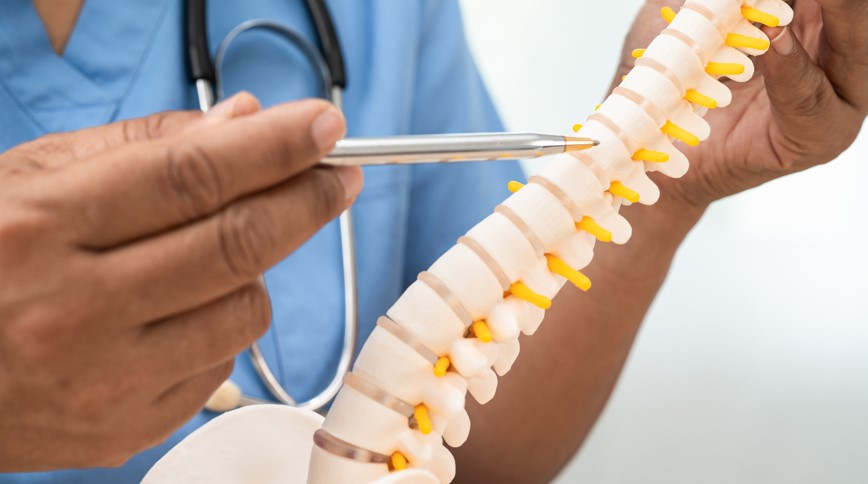
Back and neck problems come in many forms, and so do the braces that treat them. If you've been told you need spinal support, or you're simply trying to make sense of the options, it helps to see the full picture in one place. At Orthopedic Appliance Company in Bryant, we provide the complete range of spinal orthoses, from soft lumbar supports to rigid custom braces, fitted by certified professionals for patients across Central Arkansas.
This page is your starting point for understanding spinal bracing. Below, we walk through the main types of back and neck braces, the conditions they address, and how our Bryant team helps you find the right fit.
Understanding Spinal Orthoses
A spinal orthosis, or back brace, is a device that supports the spine, limits certain movements, and helps relieve pain while healing takes place. Braces are named for the regions of the spine they cover, which is why you'll hear terms like LSO, TLSO, and cervical orthosis. Each is designed to stabilize a specific part of the back or neck.
Bracing is one of the most common conservative treatments for back problems. Lumbosacral orthoses, for example, are widely prescribed for the conservative management of low back pain (NCBI, PubMed), and research suggests they may help selected patients with chronic low back pain reduce pain and improve function (NCBI, PubMed). The key is matching the right brace to your specific condition, which is where professional guidance matters.
Types of Spinal Braces We Offer
At our Bryant location, we fit and fabricate a full spectrum of spinal orthoses. Here's an overview of the main categories and what each is used for.
Lumbosacral Orthoses (LSO)
An LSO supports the lower back and sacral region, making it one of the most common braces for lower-spine conditions. These range from soft corsets and elastic binders to more rigid designs with posterior supports. They're often used for low back pain, disc problems, and post-surgical support.
Thoracolumbosacral Orthoses (TLSO)
A TLSO extends higher up the spine to support the thoracic and lumbar regions together. These braces offer more comprehensive control and are frequently used for spinal fractures, post-surgical stabilization, and certain deformities. Many are custom-molded for a precise, supportive fit.
Cervical Orthoses
Cervical braces support the neck, ranging from soft collars to rigid designs. They're used after neck injuries, cervical fractures, or surgery, and for some degenerative conditions. For neck-specific bracing, our cervical and neck braces page covers this area in detail.
Scoliosis Braces
For spinal curvature, specialized braces help manage progression, particularly in growing adolescents. These are carefully designed and adjusted to each individual. You can learn more on our dedicated scoliosis back brace page.
Soft Supports and Corsets
For milder needs, soft lumbar supports and corsets provide gentle compression, warmth, and a helpful reminder to move carefully. They're often used for mild strains or as part of a broader treatment plan.
Conditions We Help Address
Spinal bracing supports a wide range of back and neck conditions. Our Bryant team works with your physician to determine whether a brace is right for you, and which type fits your needs. Common reasons for spinal bracing include:
- Chronic and acute low back pain
- Spinal compression fractures, including those related to osteoporosis
- Post-surgical support after fusion, laminectomy, or discectomy
- Degenerative disc disease and spinal stenosis
- Spondylolisthesis and other instability
- Scoliosis and spinal curvature
- Arthritis of the spine
If arthritis is your main concern, our braces for lower back arthritis page goes deeper on that topic.
Custom Fitting at Our Bryant Office
The right brace only works if it fits well, so fitting is a careful, individualized process. Our certified orthotists review your diagnosis and medical history, assess your spine and posture, and discuss your daily activities and goals. From there, we select or fabricate the appropriate brace and fit it precisely, whether that's an off-the-shelf support or a fully custom-molded device.
We also make sure you leave knowing how to wear and care for your brace, and we're here for adjustments as your condition changes. You can explore our full range of custom orthotic solutions to see how we tailor devices to each patient.
Insurance and Coverage
Coverage for spinal braces varies by plan and by the specific device prescribed. Many braces are covered when they're medically necessary and ordered by your physician. Our team is glad to help you verify your benefits and handle the paperwork, and our insurance information is a helpful place to begin. For details on your situation, just reach out and we'll walk you through it.
Frequently Asked Questions
How do I know which type of back brace I need?
The right brace depends on your diagnosis, the region of your spine involved, and your treatment goals. Choosing on your own can lead to too little support or unnecessary restriction. A professional evaluation, coordinated with your physician, is the best way to find the right match.
How long will I need to wear a spinal brace?
It varies widely. Some braces are worn for a few weeks during recovery from surgery or a fracture, while others support ongoing conditions over a longer period. Your physician and our team will set a schedule based on your needs.
Will a back brace weaken my muscles?
When used as directed and as part of a broader plan, a brace shouldn't cause meaningful muscle weakness. Bracing usually works best alongside appropriate activity and therapy, and we coordinate with your care team so your brace complements the rest of your treatment.
Are spinal braces custom-made?
Some are, and some aren't. Soft supports and many standard braces come in prefabricated sizes, while more complex conditions often call for a custom-molded device. We'll recommend the option that best fits your condition and comfort.
Does the Bryant location offer spinal bracing for all ages?
Yes. We provide spinal orthotic care for adults and children across Central Arkansas, from soft supports to custom braces, all fitted by our certified team.
Find the Right Support for Your Spine
Back and neck conditions are highly individual, and so is the right brace. Whatever your situation, our Bryant team is here to help you understand your options and find comfortable, effective support tailored to you. We're proud to serve patients throughout Bryant, Benton, Alexander, and the surrounding Central Arkansas communities.
Ready to get started? Please contact us to schedule a consultation, and we'll help you find the spinal support that fits your needs.
Visit Our Bryant Office
Orthopedic Appliance Company 611 Office Park Drive, Suite 3 Bryant, AR 72022 Phone: (501) 508-2227 Hours: Monday through Friday, 8am to noon and 1pm to 5pm