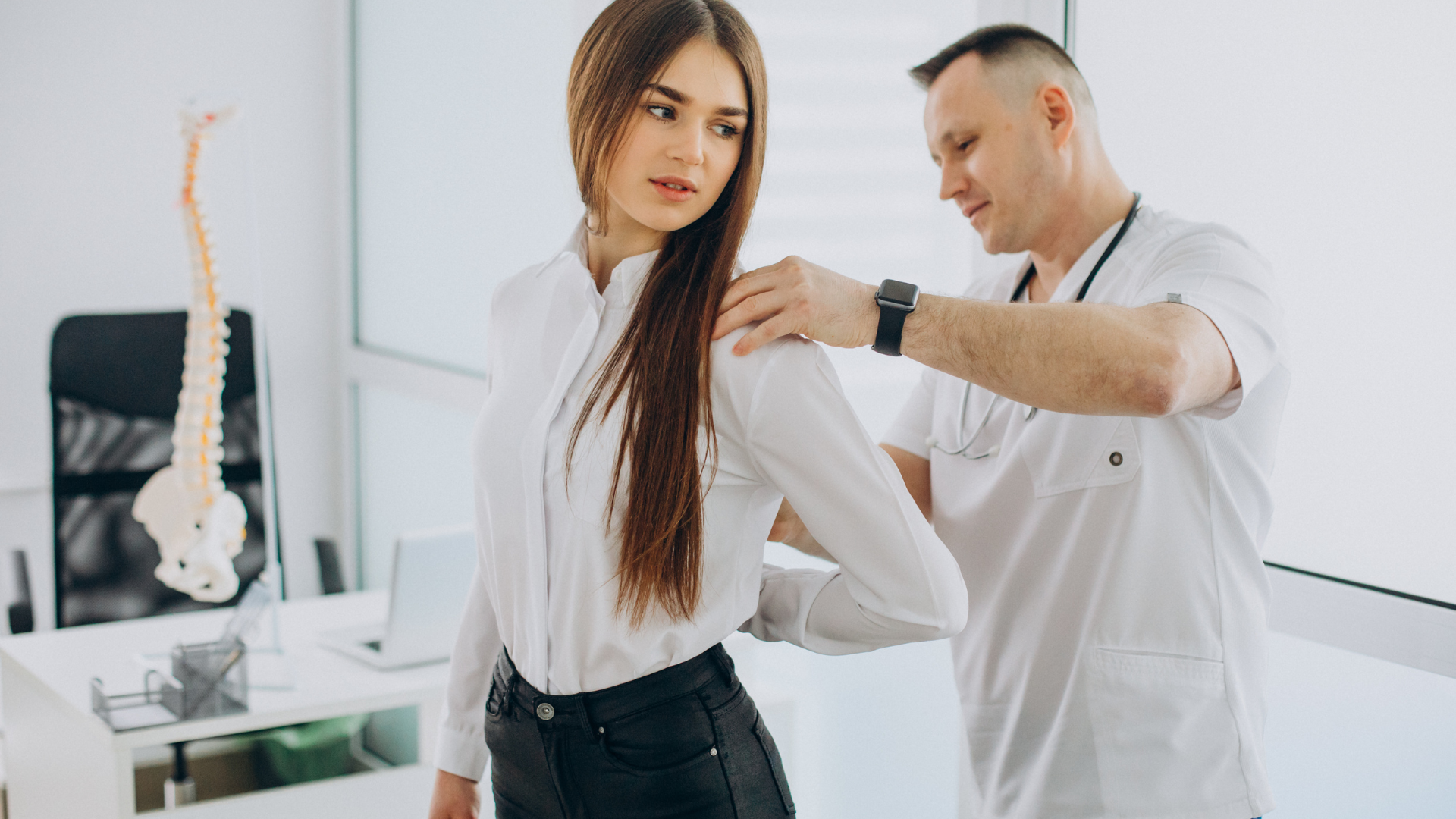
A scoliosis diagnosis brings a wave of questions for any family, and having experienced, compassionate care nearby makes a meaningful difference. At our Fletcher office, located at 235 St. Johns Road, Orthopedic Appliance Company provides custom scoliosis bracing for children and teens throughout Henderson County and the surrounding region. We combine decades of experience with a genuinely family-centered approach.
Since 1960, Orthopedic Appliance Company has cared for patients of all ages, and scoliosis bracing has long been part of that work. Our Fletcher location brings that expertise close to home, so Henderson County families do not have to travel far for expert evaluation, fitting, and follow-up.
Understanding Adolescent Idiopathic Scoliosis
Scoliosis is a sideways curvature of the spine that often involves some rotation, and the most common form in young people is adolescent idiopathic scoliosis. The term "idiopathic" means there is no single known cause, and this form typically appears during the growth years around ages 10 to 16. Many curves are mild and need only monitoring, while moderate curves in a growing child are often candidates for bracing.
The goal of bracing is to prevent a curve from worsening during growth rather than to fully straighten the spine. With proper management during these years, most teens go on to lead active, healthy lives. To learn more about the condition and what to expect, our blog on scoliosis and spinal bracing for teens offers a thorough, research-based overview.
Scoliosis Brace Types We Provide
The right brace depends on the location and size of the curve, your child's growth stage, and the physician's prescription. Our certified practitioners fabricate and fit each device to the individual child for both comfort and effectiveness. Common options include:
- The Boston brace (TLSO): A custom-fitted, low-profile brace worn under clothing that supports the thoracic and lumbar spine, and the most commonly prescribed scoliosis brace.
- Other TLSO designs: A range of thoracolumbosacral orthoses selected to match a specific curve pattern.
- Nighttime braces: Designs such as the Charleston Bending Brace that are worn during sleep and may suit certain curve patterns.
Your physician and our orthotists work together to determine the most appropriate brace for your child's needs.
How Bracing Works Alongside Monitoring and Therapy
Bracing is one part of a coordinated approach to scoliosis care. Throughout treatment, your child's physician monitors the curve with periodic imaging to track how it responds during growth. Bracing complements that monitoring by helping limit progression during the years when curves are most likely to change.
Physical therapy and staying active also play supporting roles for many children. We collaborate with your child's broader care team so that the brace fits into a complete plan. This team approach helps ensure your child receives well-rounded support.
The Evaluation and Fitting Process at Our Fletcher Office
A well-fitted brace is central to both comfort and effectiveness, which is why our fitting process is careful and individualized. The process generally begins with a review of your child's medical records and physician's prescription, along with an assessment of their specific needs.
From there, our practitioners take precise measurements, and often use casting or digital scanning to capture the exact shape of the torso. This detailed approach helps ensure the brace fits properly and does its job comfortably. You can explore the broader range of devices we provide on our orthotics page.
Because children grow, follow-up is built into scoliosis care. We monitor fit over time and make adjustments as your child develops, so the brace continues to provide proper support throughout treatment.
Addressing Common Parent Concerns
It is natural to have concerns when your child is prescribed a brace, and we welcome your questions. Parents most often ask about three things: appearance, activity, and compliance.
On appearance, modern braces like the Boston brace are low-profile and designed to be worn discreetly under clothing. On activity, many children continue to participate in school and sports, often removing the brace for physical activity within their physician's guidelines. On compliance, consistent wear is one of the strongest predictors of success, which is why comfort and emotional support matter so much. For guidance on the emotional side, our article on the psychological impact of orthotic braces is a helpful resource.
What Our Patients Say
Families and patients consistently tell us how much careful fitting and clear communication matter. Here is what a few have shared about our Fletcher team:
"Mr. Huskey was detailed and thorough in his preparation of my brace, as well as in explaining its purpose and what I should expect in wearing the item. Exemplary professionalism."
— John K.
"Could not have been a more pleasant experience. The orthotics are of good quality. They worked closely with my insurance company, and I was fortunate to have a minimal out-of-pocket responsibility."
— Barbara Z.
"Mr. Huskey is extremely thorough and explains every little detail and answers every question you have. I would highly recommend Orthopedic Appliance in Fletcher to anyone."
— K. Blackwell
Insurance and Coverage
Questions about coverage are common, and our team is glad to help. Orthopedic Appliance Company accepts most major insurances, including Medicare and Medicaid, and a prescription is required to file any insurance claim. Our patient coordinators can help you understand your benefits, and you can learn more on our insurance page.
For questions about specific costs, please reach out to us directly so we can provide accurate information based on your coverage and needs.
Frequently Asked Questions
At what curve size is bracing recommended?
Bracing is generally considered for moderate curves in children who are still growing, while smaller curves may only need monitoring. Your child's physician determines whether bracing is appropriate based on the curve and growth stage.
Can my child play sports while wearing a scoliosis brace?
In many cases, yes. Braces can often be removed for sports and physical activity within the physician's guidelines, and staying active supports overall health.
How long will my child need to wear the brace?
Bracing typically continues until a child finishes growing, since the risk of progression drops at skeletal maturity. Your physician monitors growth and the curve to determine when bracing can end.
Do I need a prescription for a scoliosis brace?
Yes. A prescription from your child's physician is required to file an insurance claim and is part of coordinated care. Our team can help you understand what is needed.
Schedule a Scoliosis Evaluation in Fletcher
If your child has been diagnosed with scoliosis, our Fletcher team is ready to help with experience, skill, and a family-centered approach. We will review the prescription, fit the brace with care, and support your family throughout treatment. Please contact Orthopedic Appliance Company to schedule a scoliosis evaluation at our Fletcher office.